
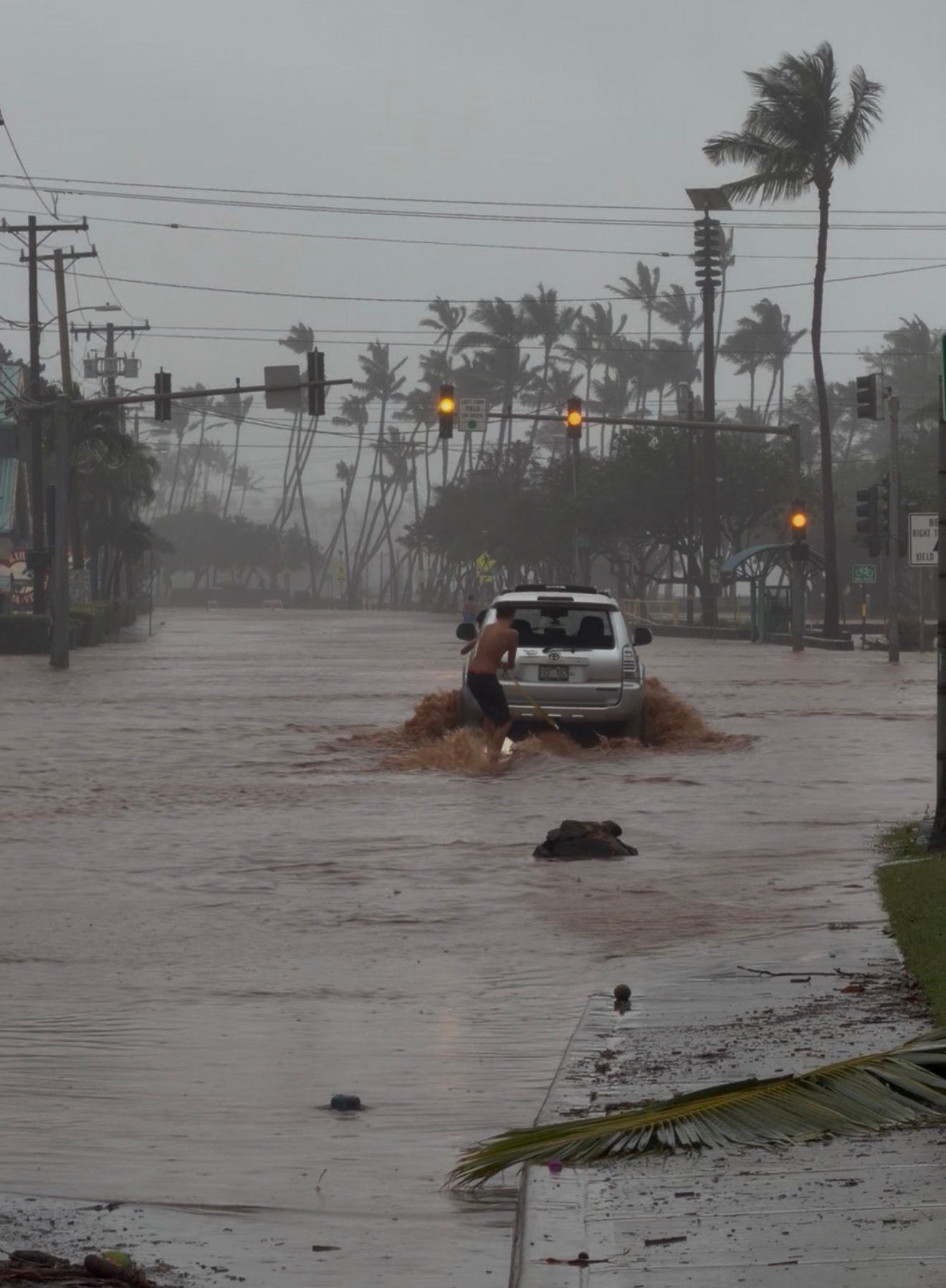
We recently returned from a trip to Maui that was built around one primary objective—spend as much time as possible in the field.
The plan was a DIY public land bow hunt. Steep terrain, thick vegetation, cliffs, and long days moving through areas that demand both physical effort and attention. The kind of environment where preparation matters—and where you’re there to put that preparation to use.
Instead, two Kona lows moved through.
Roads were closed. Parks were shut down. Access points were blocked. Conditions made it unrealistic—and at times unsafe—to reach the areas we had planned for.
What was supposed to be a physically demanding, hunt-focused trip was completely shut down.
When the Plan Is No Longer an Option
There’s a difference between a plan not going perfectly and a plan not being available at all.
This wasn’t a matter of adjusting routes or putting in more effort. The conditions dictated what was possible—and what was possible didn’t include the hunt we had built the trip around.
That’s where expectations get tested.
Not in minor inconveniences, but in situations where the original objective is no longer on the table.
The Initial Reaction
The honest reaction was disappointment.
There’s time invested. Preparation leading up to it. A clear picture of how things are supposed to go. When that disappears, it takes time to recalibrate.
At first, there was still some optimism—checking conditions, watching for updates, hoping things would reopen.
But as the days went on, it became clear that wasn’t going to happen.
That’s when the shift has to occur.
The Shift: From Expectation to Reality
The adjustment wasn’t instant. It happened gradually.
At some point, you stop waiting for the situation to change and start working with what’s actually in front of you.
For us, that meant:
- Spending time working on the business
- Exploring areas of the island that were still accessible
- Being outside where we could—even if it wasn’t in the way we originally planned
It wasn’t the trip we had outlined.
But it was still time used well—just in a different direction.
The Core Issue: Rigid Expectations
The mistake isn’t having a plan.
The mistake is attaching certainty to how that plan is supposed to unfold.
Hunting exposes this quickly.
There are too many variables:
- Weather
- Access
- Animal movement
- Terrain conditions
You can prepare well and still have things not go your way—not because you did anything wrong, but because you’re operating in an environment that doesn’t answer to your plan.
A More Durable Approach
The goal isn’t to lower expectations—it’s to structure them differently.
Plan with intent
Put real thought into what you’re doing. Prepare. Train. Organize.
Remove certainty
Understand that outcomes are never guaranteed, no matter how solid the plan is.
Stay adaptable
When conditions change, the goal shifts from executing the original plan to making the best possible decision with what’s in front of you.
Keep perspective
One disrupted trip doesn’t erase the value of preparation or the direction you’re moving.
What This Reinforced
This trip reinforced something simple:
You can’t control how things unfold—but you can control how you respond when they don’t.
Rigid expectations—especially in unpredictable environments—create unnecessary friction when things change.
Flexibility doesn’t mean lowering standards.
It means adjusting without losing direction.
Final Thought
Not every plan works out the way you expect.
Sometimes it requires small adjustments.
Sometimes it’s a complete shutdown.
Either way, the outcome is the same—you’re forced to adapt.
The people who handle that well aren’t the ones who avoid disruption.
They’re the ones who expect it, account for it, and move forward anyway.